Smart Community
How a two-month live pilot and prototype testing across India, Italy and Brazil shaped the community experience in Planet App.

Challenge
Understand whether residents would actively use a digital community service and which features could support meaningful connections beyond in-person events.
Approach
We tested desirability through a two-month Mighty Networks community, combining digital groups with in-person activities. The insights informed prototypes that were usability-tested with 10 residents in each location.
Outcome
The research defined a clear feature set and interaction model. The validated community functionality was then integrated into Planet App, helping residents connect, organise activities and stay informed.
Overview
Building on my earlier research into local similarities and differences, we tested the community experience in India, Italy and Brazil, with a stronger focus on India as Planet’s newest market.
The objective was not simply to add another communication tool. Most communities already used WhatsApp and other informal channels. The challenge was to understand what was missing and whether a more structured experience could create meaningful participation.
Timeline
Context research
Compared community needs across India, Italy and Brazil.
Live community setup
Created groups, discussions and events in Mighty Networks.
Community experiment
Observed participation across digital spaces and in-person activities.
Prototype testing
Compared alternative channel structures and tested key tasks.
Product integration
Refined community features were integrated into Planet App.
Understanding the existing experience
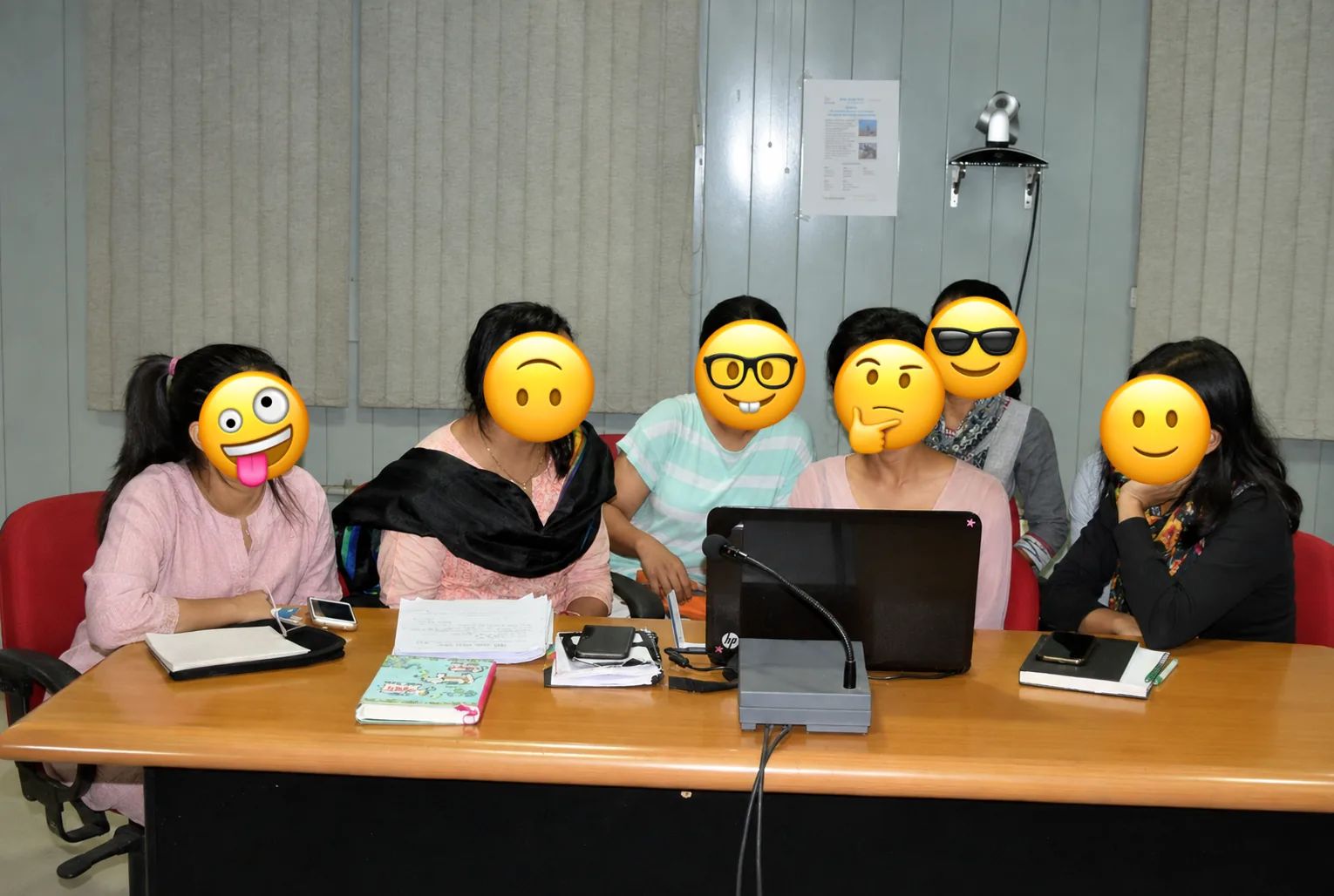
The research began with interviews involving representatives of large, small and micro residential societies.
The conversations revealed recurring problems. Group chats became crowded and difficult to moderate. Residents struggled to find relevant information or identify neighbours with shared interests. Decisions were not always transparent, different generations participated in different ways, and many people lacked opportunities or spaces to meet.
These interviews helped frame the central research question:
Could a combination of digital tools and in-person activities help residents build a more active and connected community?
Listening to women residents in India
Testing desirability through a live community
Interviews could tell us what residents said they wanted, but not whether they would actually participate.
Instead of immediately developing new functionality inside Planet App, we used Mighty Networks to create a live version of the service. I helped structure the digital environment around groups, topic-based channels, discussions, announcements, polls and events.
How the research was organised
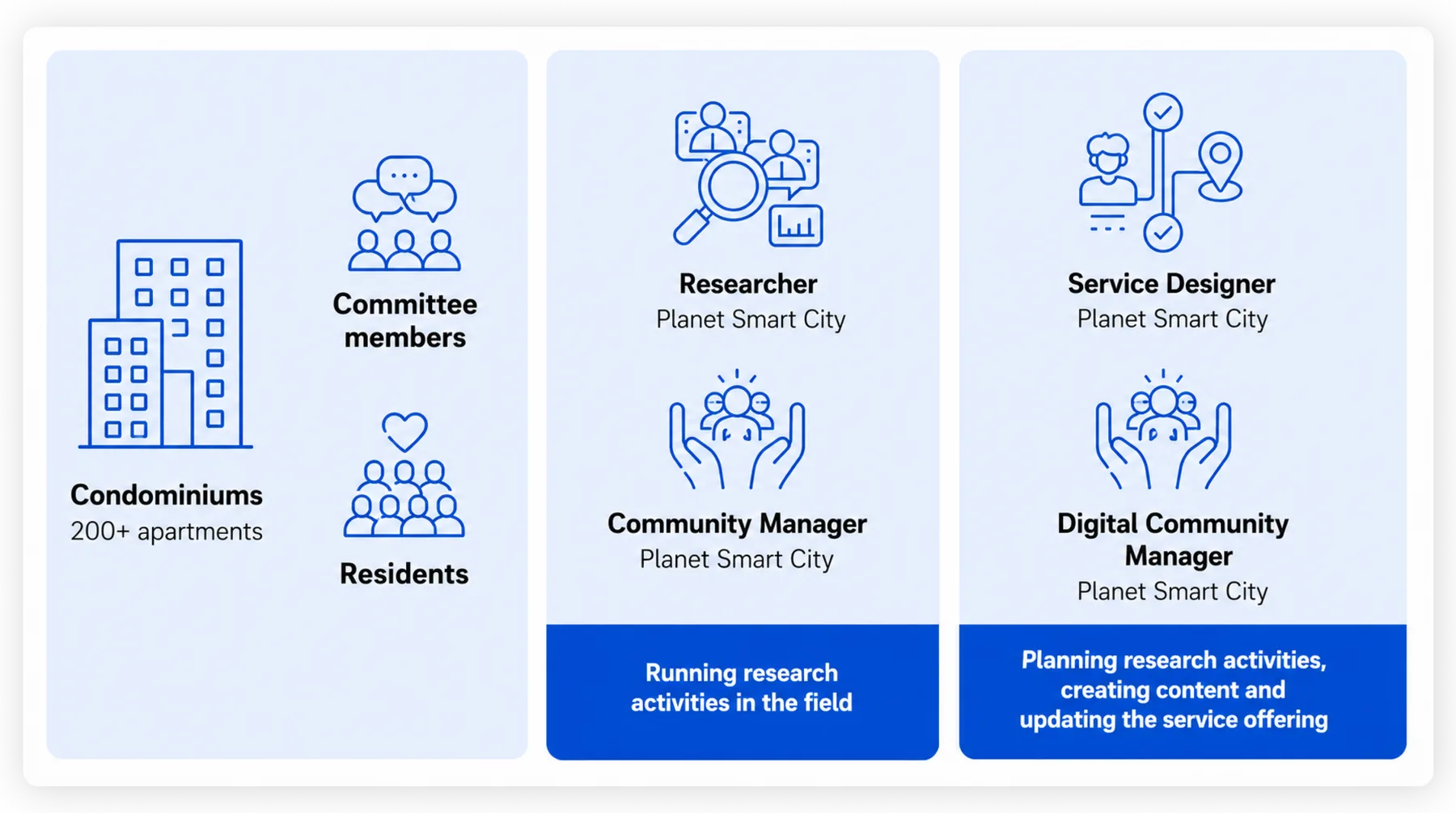
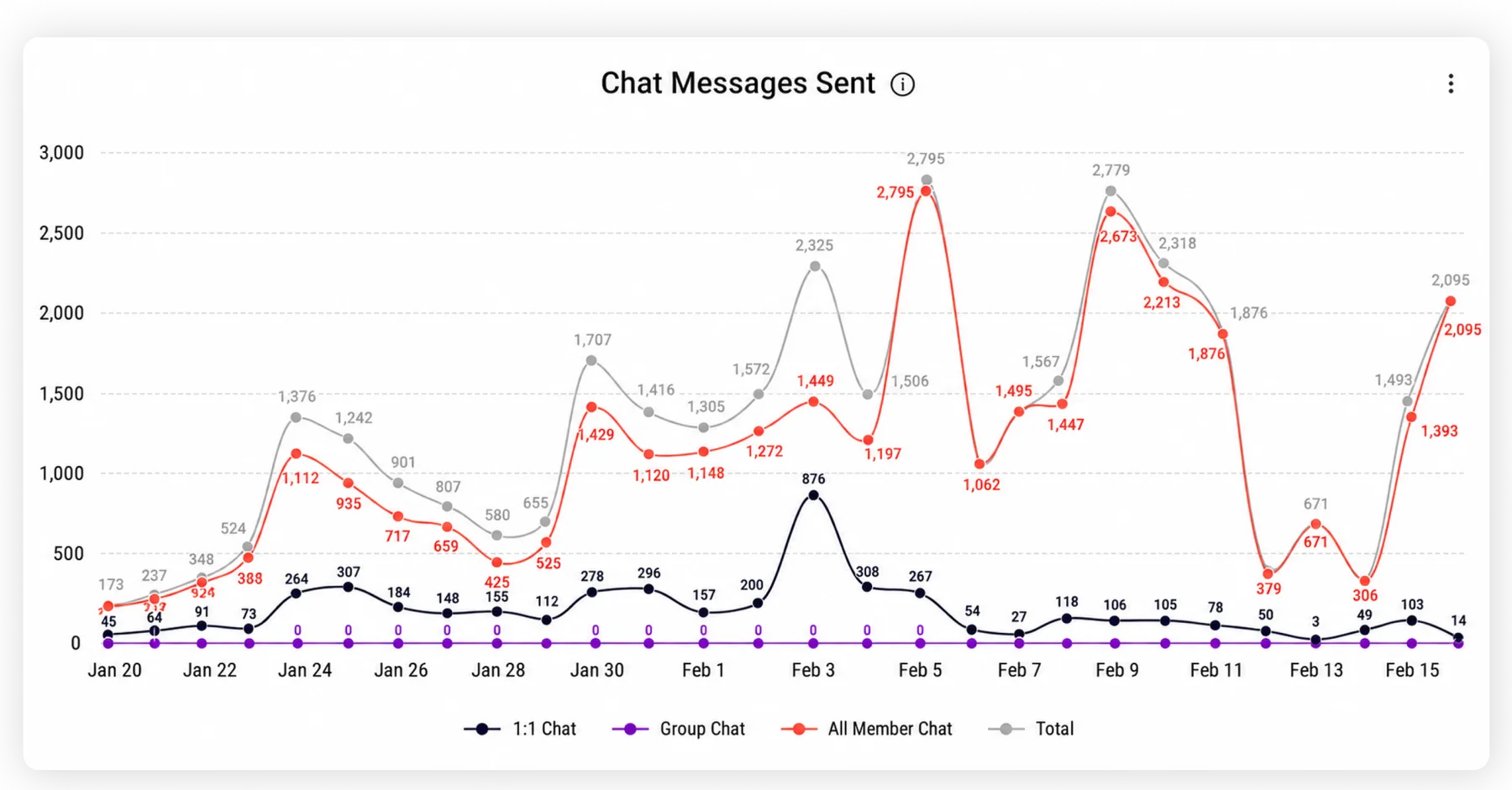
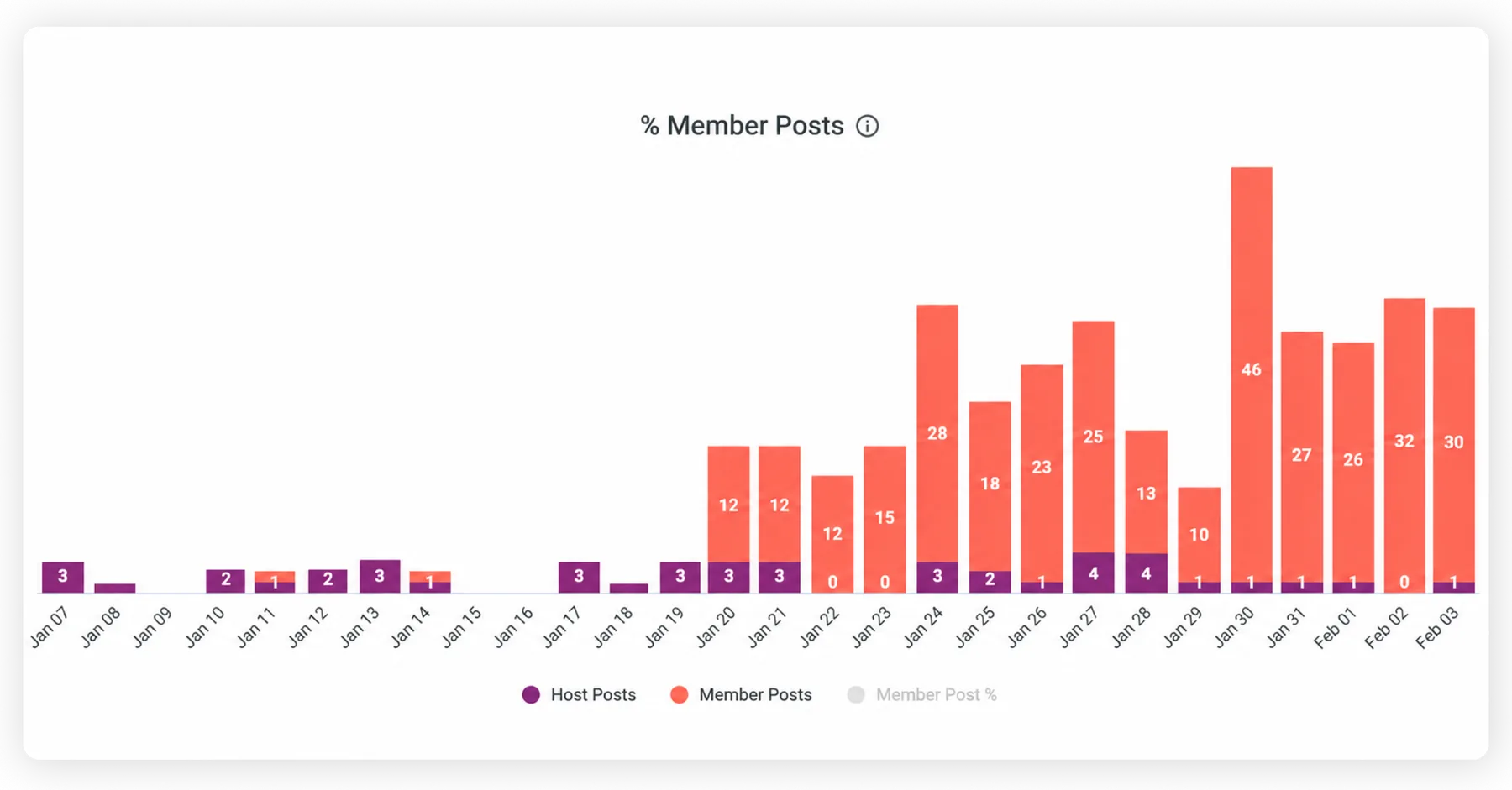
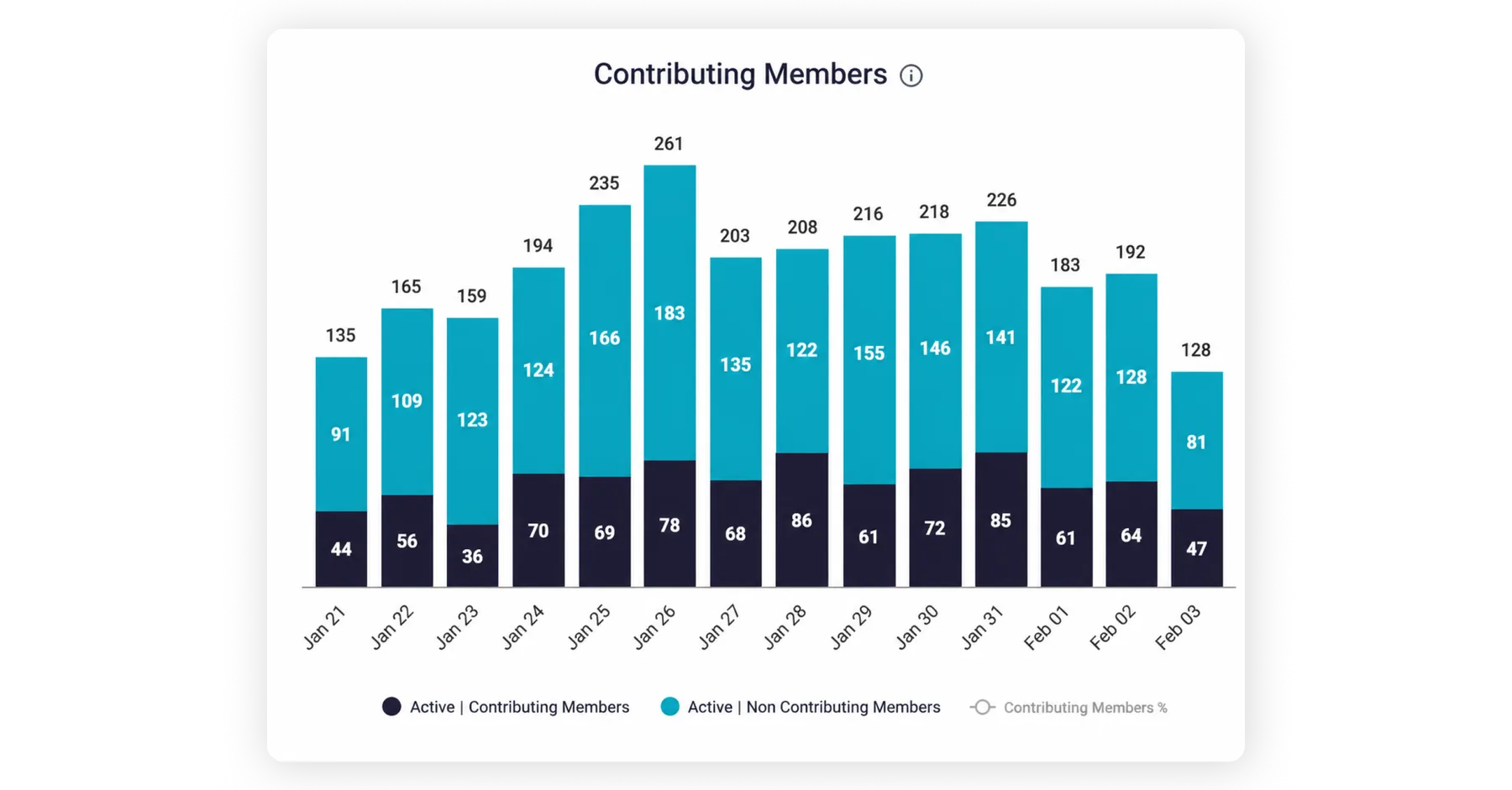
This allowed us to test desirability through real behaviour rather than relying only on stated preferences. I analysed weekly usage data to identify which tools and features residents used most and least, then compared these patterns with their feedback. This revealed the difference between what people said they wanted and what they actually found useful in everyday life.
Weekly community data
What real behaviour revealed
After two months, a clear pattern began to emerge. Residents were actively participating, but most conversations happened in the common chat, while dedicated groups received little attention.
At first, this looked like a preference for one shared space. But the platform itself may have influenced that behaviour: the chat was always visible and easy to enter, while groups were hidden behind additional navigation.
As participation increased, the common chat also became harder to follow. Unrelated topics overlapped, conversations moved quickly and useful information was easily lost. The experiment revealed not a clear solution, but an important open question: did residents genuinely prefer one shared conversation, or were they simply following the easiest path?
Prototypes
Turning an open question into prototypes
Rather than assuming that residents did not want separate groups, I turned this uncertainty into two design hypotheses.
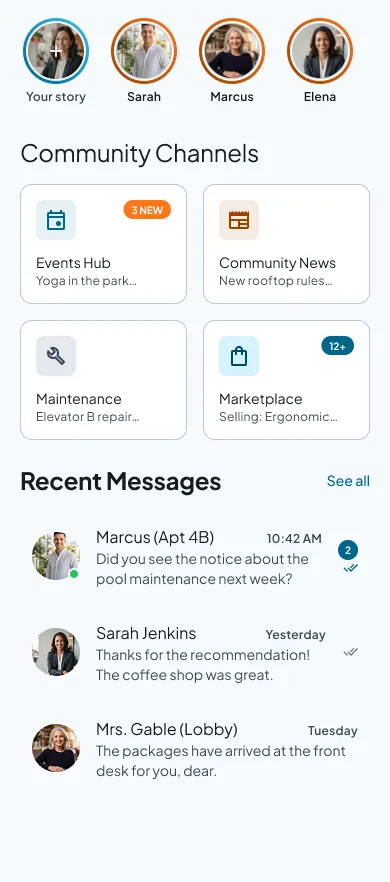
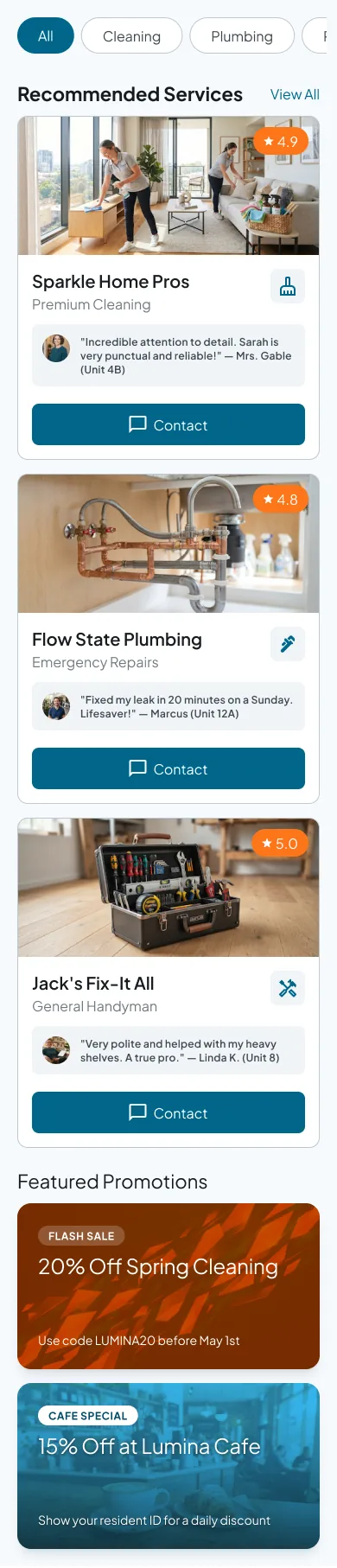
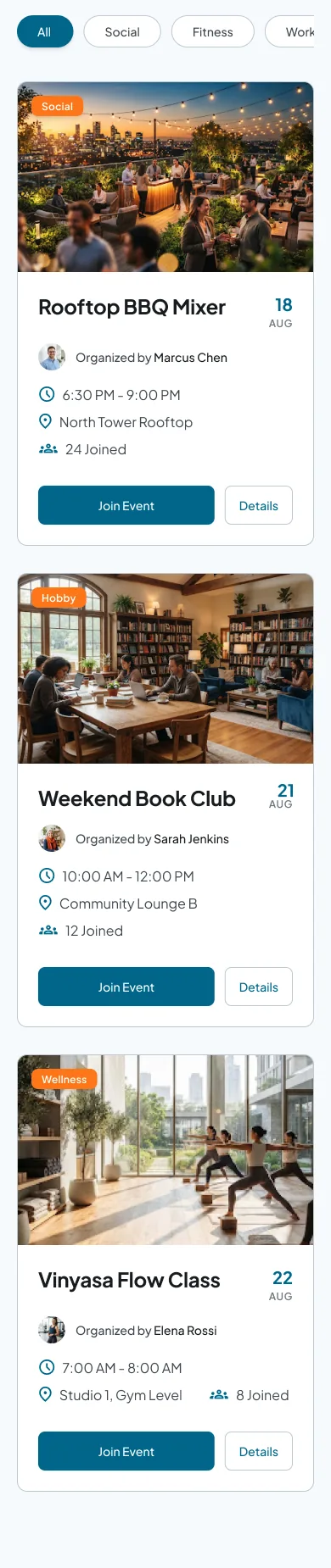
One prototype kept all content within a shared channel. The second introduced multiple category-based channels, but made them immediately visible and as easy to access as the common chat. Testing both structures allowed us to separate genuine user preference from the limitations of Mighty Networks.
Multichannel version
Putting the prototype in users’ hands
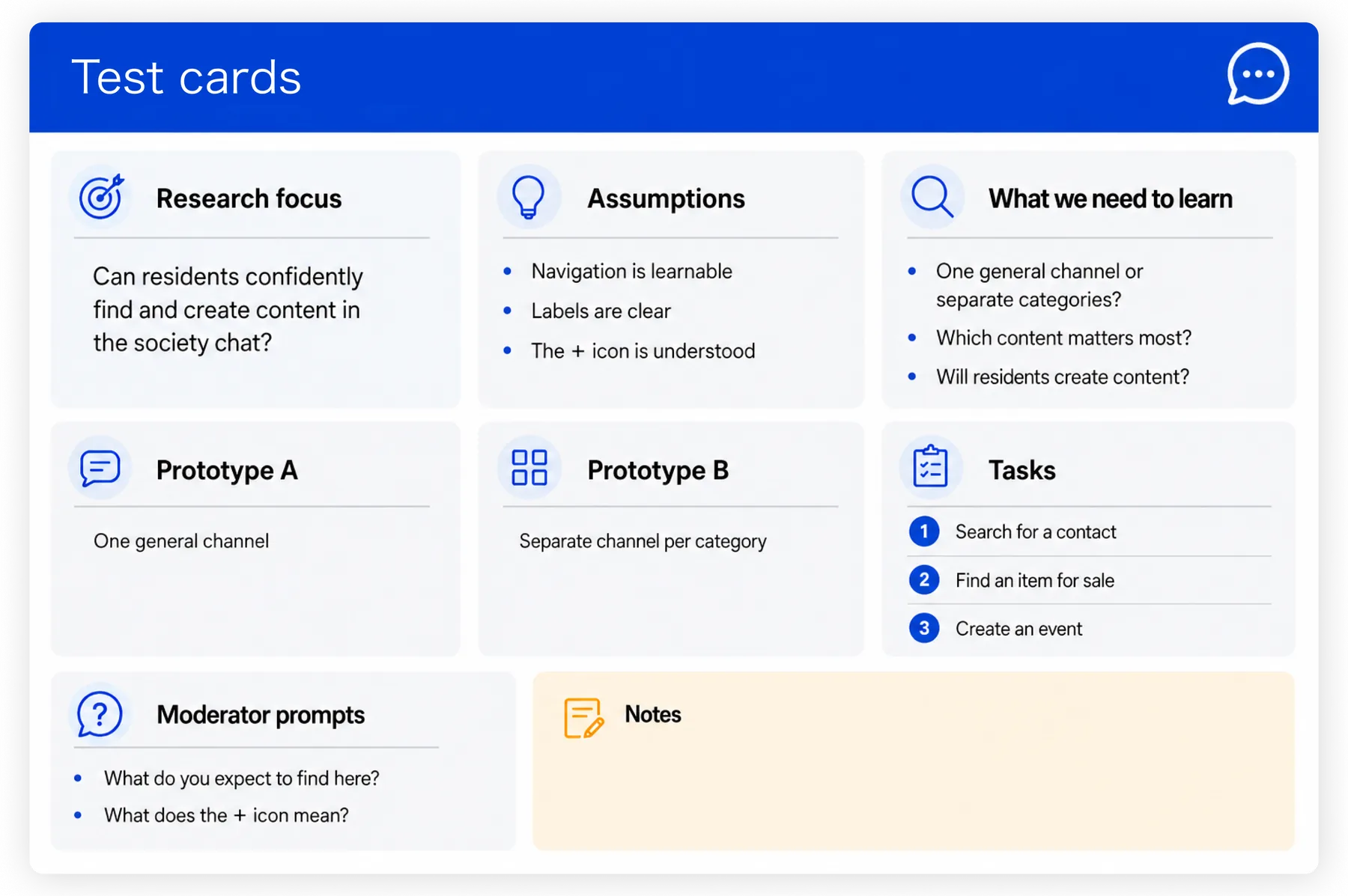
To move beyond our interpretation of the usage data, we tested both prototypes face-to-face with 10 residents in each of the three markets.
As I could not facilitate every session myself, I trained local facility managers and provided a detailed guide covering the tasks, questions and observations to capture. This kept the testing approach consistent while allowing each session to take place in the participants’ own language and familiar environment.
Residents were asked to find a contact, search for an item for sale and create an event. We observed where they hesitated, whether the labels and “+” icon were clear, and which channel structure made content easier to find and create.
Why the multi-channel structure worked better
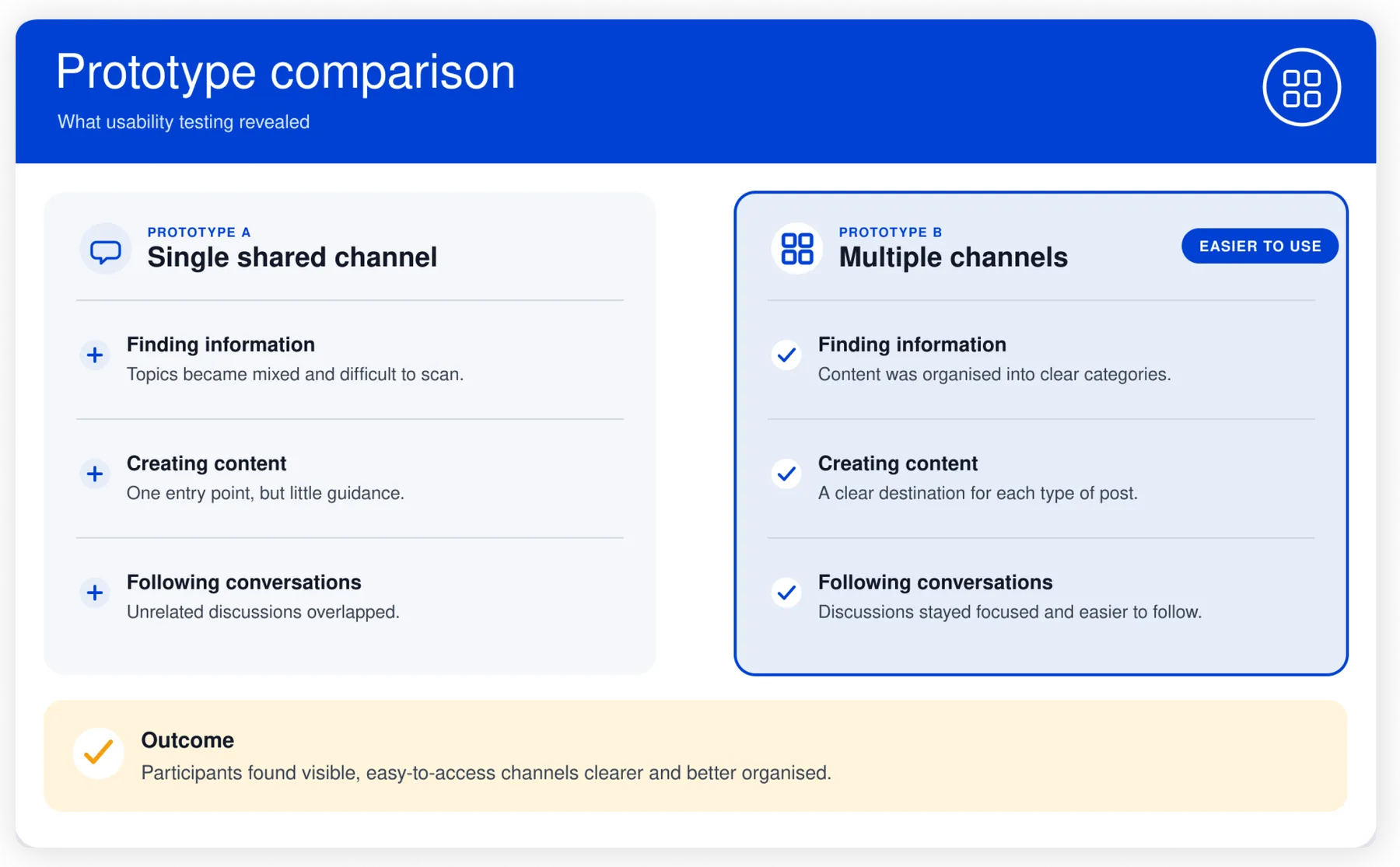
On Mighty Networks, the low use of groups initially suggested that residents preferred one shared conversation. The usability test told a different story. Once multiple channels were made visible and easy to access, participants found the experience clearer, easier to navigate and better organised.
The issue was not a lack of interest in separate channels, but the way they had previously been hidden.
Outcomes
1. Validated real demand
The two-month experiment showed that residents across all three markets used digital tools to continue connections between in-person activities.
2. Defined a clearer structure
Usability testing showed that visible, easy-to-access channels helped residents find, create and follow content more easily.
Moved from research into product
The findings defined the final feature set and interaction model, which were later integrated into Planet App.
Learnings
Usage data does not always reveal preference
The low use of groups could have led us to remove them. Prototype testing showed that residents had not rejected the idea; the groups were simply too difficult to discover.
Test the service before perfecting the interface
Mighty Networks was not the final product, but it allowed us to observe real participation before investing in development. It revealed which behaviours and needs were worth designing for.
Community requires momentum, not only functionality
Digital tools helped conversations continue, but in-person activities and community managers gave residents the initial reason to participate.
Local facilitation can strengthen cross-market research
Training facility managers allowed testing to happen face-to-face and in local languages, while a shared guide kept the research consistent across locations.
Links
Where the work lives today


Looking for more detail on this project, or have a similar challenge in mind?